


PMB 75/130 Polymer Modified Bitumen Specifications & Supply
A soft modified binder, quoted against the full class your specification sets
PMB 75/130 is a polymer modified bitumen with a nominal penetration range of 75 to 130 (0.1 mm at 25°C). It sits in the softer half of our polymer modified bitumen range, where flexibility is usually the reason it’s specified, and where the rest of the class requirements need careful checking.
TurkeyBitumen.com, operated by Tiger Bitumen and HY International Group, supplies this binder to contractors, asphalt producers and importers with Turkey-related requirements. We ship from Tiger Bitumen’s export facilities in Karachi Free Zone, Pakistan, and Ajman, UAE. Every quotation is prepared against the specification you send us.
| Key Facts | ||
| Product | Polymer modified bitumen, nominal 75/130 range | |
| Nominal penetration range | 75-130 (0.1 mm) at 25°C | |
| Position in the PMB family | Soft; softer than 65/105, harder than 90/150 and above | |
| Overlapping ranges | 40/100, 65/105, 90/150 and 120/200 | |
| Classification framework | EN 14023, TS EN 14023 or the project's own specification | |
| Complete designation | Confirmed against your specification at quotation stage | |
| Documentation | TDS and COA for the offered product; independent inspection on request | |
| Commercial terms | FOB, CFR or CIF | |
| Supplied from | Tiger Bitumen export facilities, Karachi Free Zone and Ajman | |
Where PMB 75/130 Sits in the PMB Family
A penetration result between 75 and 130 means the standard needle sinks between 7.5 and 13.0 mm into the binder at 25°C. That’s clearly in the soft part of the family.
The range shares part of its window with four neighbours. Each one is a separate class with its own requirements:
| Range | Shared penetration band |
| PMB 40/100 | 75-100 |
| PMB 65/105 | 75-105 |
| PMB 90/150 | 90-130 |
| PMB 120/200 | 120-130 |
Complete Designation and Softening Point
Under EN 14023, 75/130 is the penetration part of a designation. The complete designation adds a softening-point requirement, which the specifier selects from the classes the standard provides. The specification may also set requirements for elastic recovery, cold behaviour, storage stability and resistance to hardening.
The softening-point class for PMB 75/130 comes from your project specification, so we don’t publish a single figure for the range. The complete designation is confirmed at quotation stage, against your specification and the TDS supplied with our offer. For background, see Tiger Bitumen’s explanation of how EN 14023 designations are built.
Projects in Turkey commonly reference TS EN 14023 or a project specification drawn from it. Include the governing document with your enquiry.
Why the Softening Point Deserves a Closer Look Here
In a soft penetration range, the binder is chosen mainly for flexibility. The softening-point requirement is what sets a floor for how it behaves when the pavement heats up. Two offers for the same soft range can carry different softening-point classes, and that difference affects how the binder handles hot-weather service.
This matters in places with both hot summers and cold winters, which includes parts of Turkey. A binder chosen for winter flexibility still has to meet the summer requirement in the specification. Check that each offer states the softening-point class your documents require, and that the batch COA reports it.
Elastic Recovery: Read the Conditions, Not Just the Number
Where a specification sets an elastic recovery requirement for this range, the percentage on its own tells you little. The result depends on the test method and the conditions set by the specification, which are commonly EN 13398 and a stated test temperature. Before you compare offers, confirm that each TDS and COA quote elastic recovery under the same conditions your specification uses.
Tiger Bitumen explains what an elastic recovery result does and doesn’t tell you in more detail.
Properties to Confirm Before Ordering
| Property | Status for the 75/130 range | Commonly referenced test |
| Penetration at 25°C | Fixed; 75-130 (0.1 mm) | EN 1426 |
| Softening point (ring and ball) | Per the class in your specification | EN 1427 |
| Elastic recovery | Per your specification, if required, at the stated conditions | EN 13398 |
| Fraass breaking point | Per your specification, if required | EN 12593 |
| Storage stability | Per your specification, if required | EN 13399 |
| Resistance to hardening (ageing) | Per your specification, if required | EN 12607-1 |
Only the penetration range is fixed by the name. All other values depend on the complete designation, and they appear in the TDS for the offered product and on the batch COA.
Where the 75/130 Range Is Typically Specified
Soft modified binders like this one are generally associated with:
- Surfacing work where the specification calls for a flexible modified binder
- Projects in cooler or highly variable climates, where the specifying authority has chosen a softer range
- Maintenance and overlay work on flexible pavements
These are general patterns. The pavement engineer sets the range and the full class for each project.
Compared with Unmodified and PG Binders
| Binder | Difference from the 75/130 range |
| PMB 65/105 | Next softer PMB range; overlaps between 75 and 105 |
| PMB 90/150 | Next softer PMB range; overlaps between 90 and 130 |
| Bitumen 100/120 | Unmodified penetration grade whose numbers fall inside this window. It contains no polymer and has a different specification basis, so it isn't a substitute |
| Performance Grade bitumen | Separate classification by pavement temperature. There is no automatic PG equivalent for this range |
Agreeing the Inspection Scope
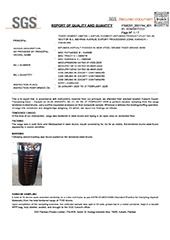
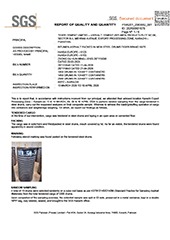
We can arrange independent inspection before shipment through SGS or Bureau Veritas on request, or you can appoint your own inspector. For a PMB, the useful question is what the inspection covers.
When you request inspection, specify:
- Which properties should be checked. Include the softening point and any other properties your specification sets, not penetration alone.
- Where and when samples should be taken. For example, before loading.
- What the inspector should check beyond testing. For example, quantity and packaging condition.
Agreeing this at quotation stage means the inspection report gives you evidence against your actual specification.
Supplying the 75/130 Range for Turkey-Related Projects
Turkey Bitumen gives buyers with Turkey-related requirements an additional, documented source for this range. That includes contractors and asphalt producers working on projects in Turkey, importers currently buying from Turkish suppliers, and consultants who need a second offer for a tender.
If you already buy this binder, send us the complete designation and specification you buy against, and any inspection scope you currently use. We’ll quote on the same basis, so you can compare specification match, documentation, inspection, shipping terms and delivered cost. Availability, quantity and shipment schedule are confirmed for each enquiry.
Documentation and Handling
- Terms: FOB, CFR or CIF.
- Documents: TDS for the offered product, plus commercial invoice, packing list, certificate of origin, COA and safety data sheet, depending on shipment and destination.
- Handling and packaging: follow the TDS for storage temperature, storage time and any agitation. Packaging is agreed at quotation stage.
Tiger Bitumen’s PMB TDS and COA checklist is a useful reference when you review the documents.
Other PMB Ranges
See the full polymer modified bitumen range, or go to another range:
PMB 10/40 · PMB 45/80 · PMB 25/55 · PMB 40/100 · PMB 65/105 · PMB 90/150 · PMB 120/200 · PMB 200/300
Other Bitumen Products
PMB 75/130 FAQs
It's a polymer modified bitumen with a nominal penetration range of 75 to 130 (0.1 mm) at 25°C, in the soft part of the PMB family.
No. It's only the penetration part. The complete designation also includes a softening-point requirement set by your specification, which is confirmed at quotation stage.
Because in a soft binder, the softening-point requirement sets the floor for hot-weather behaviour. Offers for the same range can carry different softening-point classes.
Only if they're measured under the same conditions. Confirm the method and test temperature match those in your specification.
Yes. When you request SGS or Bureau Veritas inspection, specify which properties should be checked, along with sampling and other checks.
Not automatically. EN 14023 and PG are separate classification systems. If your project is specified in PG terms, we quote against the PG grade.
Yes. We're an international source supplying from Tiger Bitumen's export facilities in Karachi Free Zone and Ajman. Turkey Bitumen is not a Turkish manufacturer. Availability and schedule are confirmed for each enquiry.


Request a PMB 75/130 Quotation
To prepare an accurate offer, please send:
- The complete designation or specification clause, including the softening-point requirement
- Any elastic recovery requirement, with the test conditions your specification uses
- Any cold-behaviour, ageing or storage-stability requirements
- The inspection scope you need
- Quantity, destination port, preferred Incoterm and packaging preference
Visit: www.TigerBitumen.com